9 chapters The method, open to check

How AgriAn works.

What the app is designed to do, chapter by chapter: for farmers who keep a spray diary, for technicians and exporters who check lots, and for anyone who wants to know how the dates are worked out.

Every number on this page comes from one invented worked example or from a named public source.

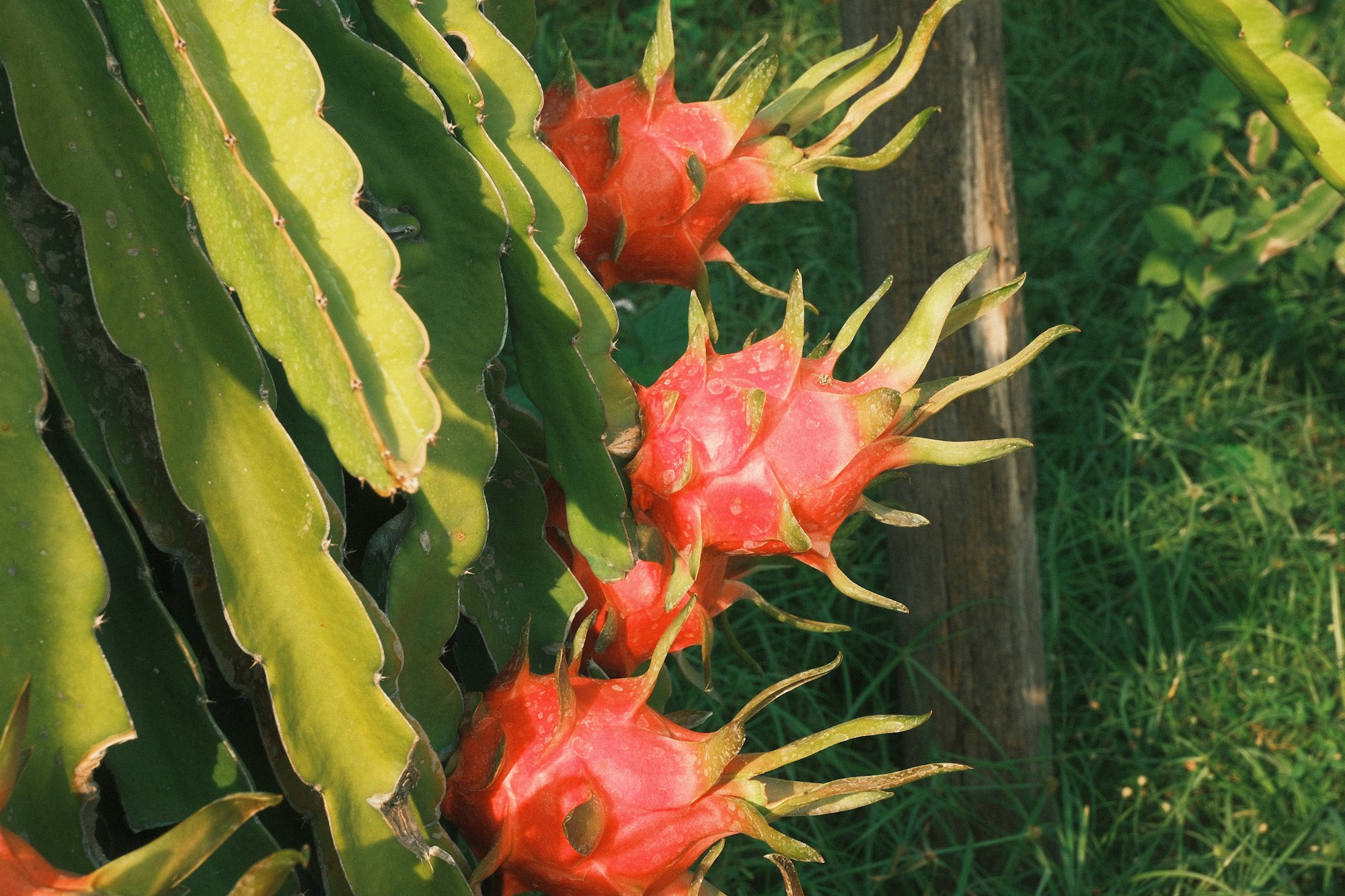
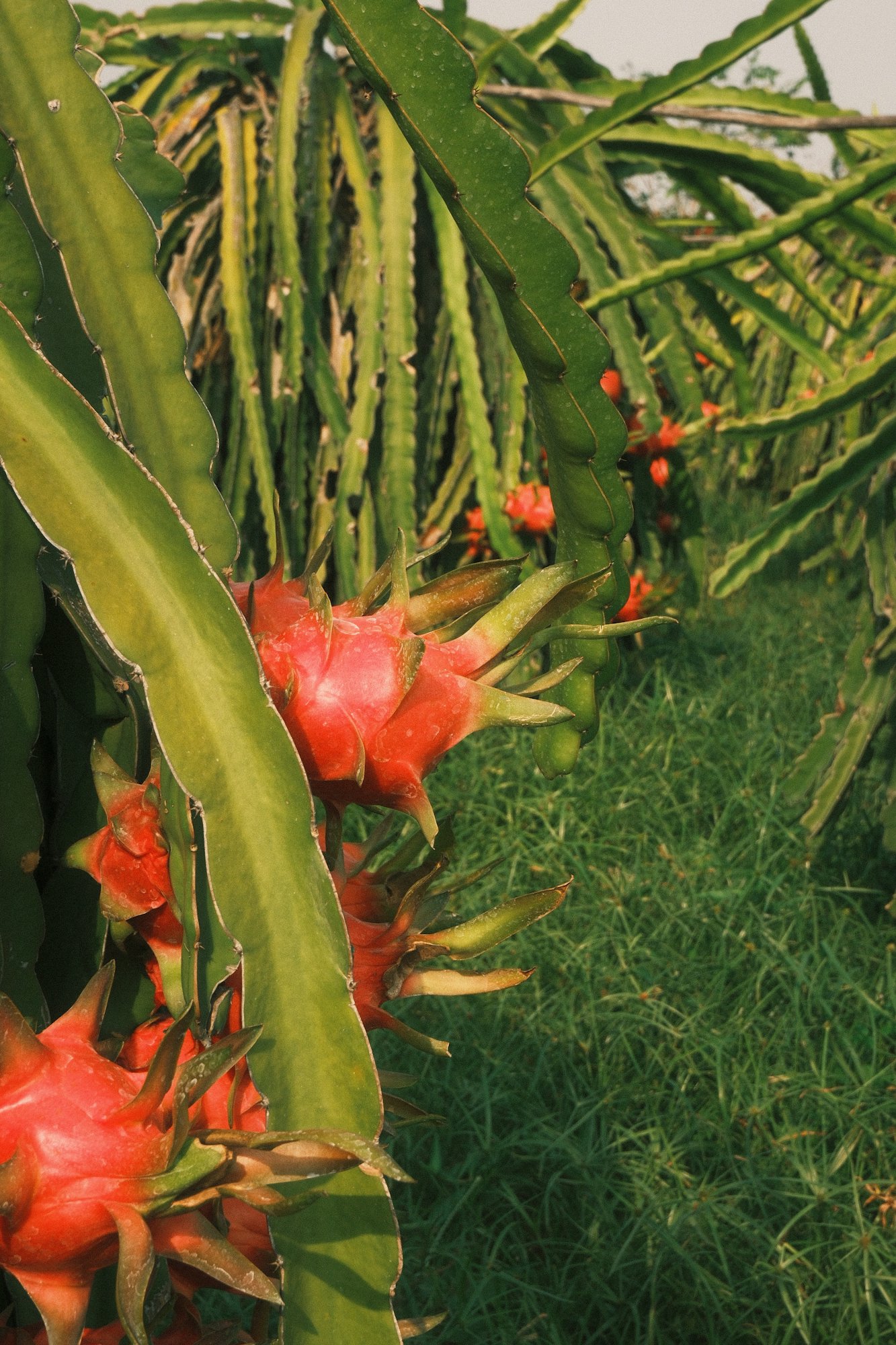
Close-up of red dragon fruits growing on a cactus stem beside a wooden post in Binh Thuan, Vietnam

Worked example

Day 61

Strict-limit market · From 1 Dec 2026

Day 71 at double the dose

Invented data.

This guide describes how AgriAn is designed to work. Screens and wording may change before and during the pilot.

Chapter 1 Using AgriAn For: Everyone

Getting started.

AgriAn is a spray advisor being built for growers of fruit, coffee, tea, vegetables and every other crop, and for the people who buy from them. You will write down each spray, and the app will show from which day the harvest should be within the residue limit of each market: the EU, China and others. It will also explain each product and pass on pest reports from official bulletins.
Weathered hands holding a smartphone showing a satellite map above green crops

1.1What “cách ly” means

Thời gian cách ly is the waiting time between the last spray and the harvest. Every product label in Vietnam prints one.

That waiting time is set for Vietnamese rules. Other markets set their own residue limits, and some are much stricter. So fruit can follow the label exactly and still be over the EU limit.

AgriAn adds what the label cannot: a separate date for each market.

1.2Who it is for

  • Quality staff at exporters and packing houses, and cooperative technicians. They come first.
  • Farmers who keep a spray diary, during the pilot.
  • Anyone, from any country, who wants to help test it.

1.3What you will need

  • An account with your e-mail address.
  • Your farm's province. The app asks for the province, not your exact position.
  • The labels or the names of the products you use.
  • The dates of your sprays, including the ones already made this season.

1.4Your first season in five steps

1

Create an account

Sign up and confirm your e-mail address.

2

Add a farm and its plots

Choose the province. Each plot gets its own card.

3

Record your sprays

Past sprays are fine. Enter the real spray date.

4

Read the dates

Each plot card shows one line per market.

5

Choose your notices

Pest reports for your province, and spraying weather.

1.5What the app does not do

It does not choose products for you

It explains what a product is and what each market allows. The decision is yours.

It does not replace a lab test

A date is a cautious estimate. Buyers may still test your fruit, and only the lab shows the real residue.

It does not forecast pests

It passes on what official bulletins report. It does not guess where pests will appear.

See the worked example on the home page

Good to know

  • You do not have to start at the beginning of a season. Past sprays can be added at any time, with their real dates.
Chapter 2 Using AgriAn For: Farmers, technicians

The spray diary.

The diary is the heart of the app. Every date comes from what is recorded here, so the more complete the diary, the more useful the dates.

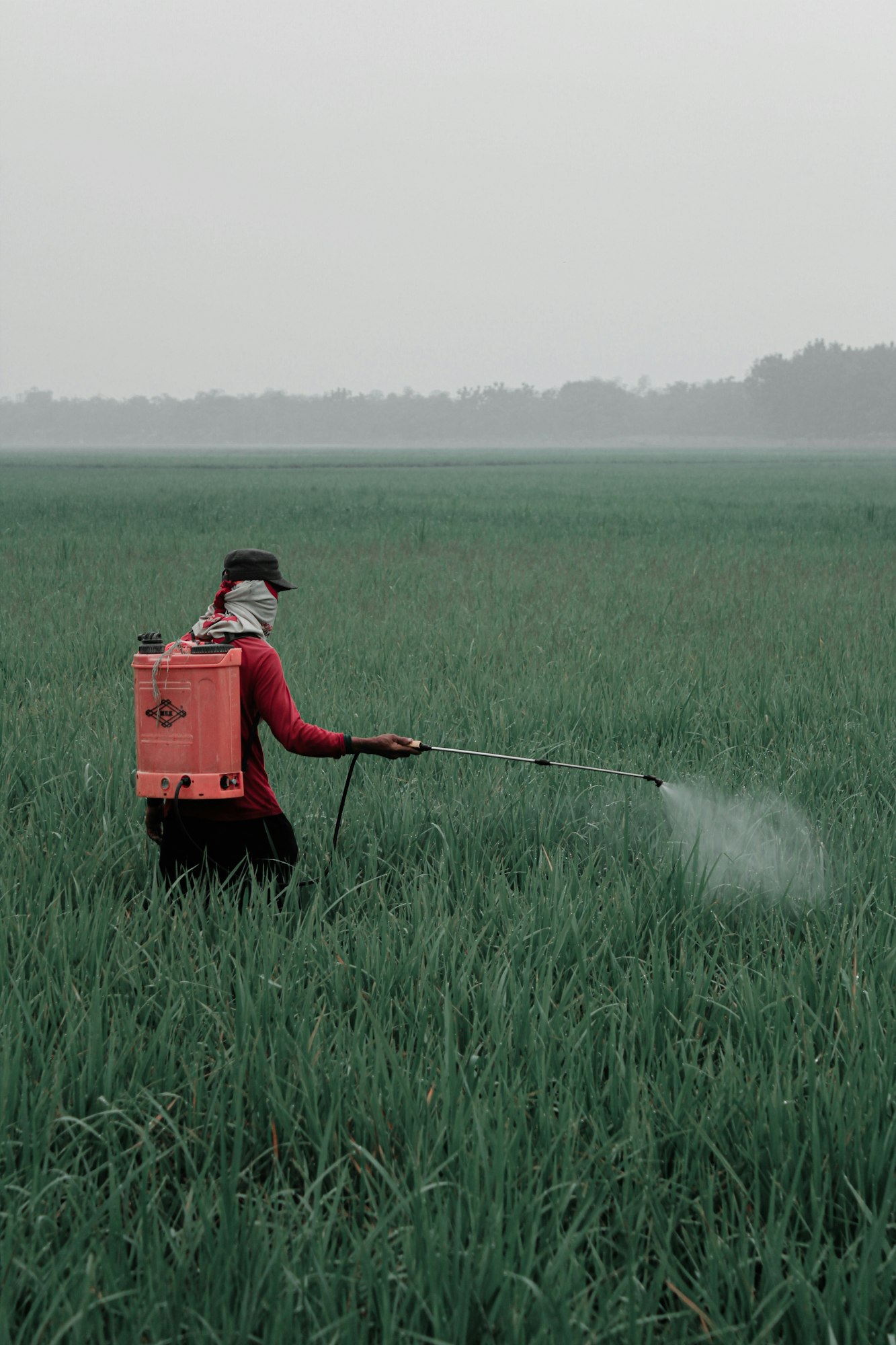
A farmer with a red backpack sprayer spraying a green field on a misty morning

2.1What to record

Six things for each spray. Only the first four affect the date.

What to record for each spray
Field What to enter Why it matters null
Product Photograph the label, or type the trade name The app will find the active substances inside
Date The day you sprayed The count starts on this day
Amount per tank How much product went into one tank, in grams or ml Sets the dose
Tank size Usually 16 litres Sets the dose
Number of tanks How many tanks you sprayed Kept for your records. The diary does not record the sprayed area, so the date does not use it
Kind of treatment Field spray, or after harvest (dip, store) After-harvest treatments are recorded but get no date
  • Product

    What to enter
    Photograph the label, or type the trade name
    Why it matters
    The app will find the active substances inside
    null
  • Date

    What to enter
    The day you sprayed
    Why it matters
    The count starts on this day
    null
  • Amount per tank

    What to enter
    How much product went into one tank, in grams or ml
    Why it matters
    Sets the dose
    null
  • Tank size

    What to enter
    Usually 16 litres
    Why it matters
    Sets the dose
    null
  • Number of tanks

    What to enter
    How many tanks you sprayed
    Why it matters
    Kept for your records. The diary does not record the sprayed area, so the date does not use it
    null
  • Kind of treatment

    What to enter
    Field spray, or after harvest (dip, store)
    Why it matters
    After-harvest treatments are recorded but get no date
    null

2.2What the diary covers

Insect, fungus and weed control, growth regulators, growth boosters and leaf fertilisers, and treatments after harvest. Growth regulators matter: some of them are tested at the EU border too.

2.3Recording past sprays

You can add sprays from earlier in the season at any time. Enter the day you sprayed, not the day you type it in. The dates update to include them.

2.4Tank mixes

If you mix two or more products in one tank, record each product as its own line with the same date. Each one is matched and counted on its own.

2.5When the app cannot read a product

If the label or name does not match a product on the official Vietnamese lists, the entry is still saved. It shows "Product not recognised" and gives no date until it is matched. You will be able to pick the right product from the list.

Diary, two entries

Illustration
  • 1 Oct 2026 Example Fungicide 70WP examplezeb, 700 g/kg
  • 4 Oct 2026 Example 25SC (name typed by hand) Product not recognised · no date until it is matched

Good to know

  • A missing piece never produces a date. If something is unknown (the product, its strength, a limit), you see "No date" and the reason, never a guess.

Chapter 3 Using AgriAn For: Farmers, technicians, exporters

Reading the dates for each market.

For each plot, the app shows one line per market: the first harvest day on which the harvest should be within that market's residue limit. This chapter explains the colours and the messages.

3.1One line per market

The date counts from your last spray of each product that matters for that market. This is how the lines look for the invented worked example:

Strict-limit market

Limit: 0.05 mg/kg

From 1 Dec 2026

High-limit market

Limit: 10 mg/kg

From the spray day

Market with no limit listed

Limit: none

No date

Example with invented data.

See how this example is worked out, step by step

3.2Green, amber and grey

Green

A date, on firm inputs

A date was worked out, and every input behind it is firm. When the residue is already under the limit on the spray day, the line says "From the spray day". The label waiting time still applies.

Amber

A date, with a caution to read

A date was worked out, but at least one input is less certain. The app says which, for example:

  • the date lies beyond the days measured in published trials
  • a general value was used because no specific one exists
  • the limit is set at the lowest level a lab can measure
  • this limit has not yet been checked by a person
Grey

No date, and why

The app cannot give an honest date. It says why:

  • product not recognised
  • no limit listed for this market
  • no decline data for this substance
  • the dose cannot be worked out
  • after-harvest treatment

There is no red. A long wait is information about a limit, not a warning about a product. Grey is never a green light.

3.3Why the markets differ

Each market sets its own limits and measures residue its own way (see 7.5). The EU often has the lowest limits, so the EU date is often the latest. But not always: for some substances every market agrees.

Three real examples on dragon fruit:

Same fruit, three substances, three markets
EU China Codex No limit listed

Limit on dragon fruit, mg/kg

Chlorfenapyr · insecticide

70 times stricter in the EU
EU
0.01
China
0.7
Codex
No limit listed

EU Pesticides Database, dragon fruit (0162040), read 16 Nov 2026; China GB 2763-2026; Codex FI 2540 Pitaya lists no limit.

Azoxystrobin · fungicide

All three agree
EU
0.3
China
0.3
Codex
0.3

EU Pesticides Database, read 16 Nov 2026; China GB 2763-2026; Codex FI 2540 Pitaya.

Mancozeb, measured as CS2 · fungicide

200 times stricter in the EU
EU
0.05
China
10
Codex
No limit listed

EU: dithiocarbamates as CS2, Reg. (EU) 2017/171; China GB 2763-2021, carried into GB 2763-2026; Codex FI 2540 Pitaya lists no limit.

Log scale: each gridline is ten times the one before. A grey hatched bar means no limit is listed, which is not a green light. China values: GB 2763 (edition per row), not yet checked by a reader of Chinese.

The routes the fruit takes: each market at the end of a route sets its own limits.

The routes the fruit takes: each market at the end of a route sets its own limits.

3.4What a higher dose does

The starting residue roughly follows the dose. Each doubling of the dose adds about one half-life to the wait (see 7.2). The app shows this so you can see the effect of the amount you use. It does not judge the dose.

Label dose · Strict-limit market

From 1 Dec 2026

Day 61. Cautious: the decline rate comes from the literature only.

Double the dose · Strict-limit market

From 11 Dec 2026

Day 71. Doubling the dose added one half-life (10 days).

3.5Several sprays and several products

Sprays of the same substance add up. Some markets also add different substances together into one measured residue (see 7.5). The date shown is the latest one needed.

3.6The label waiting time and the market dates

The label waiting time is set for Vietnamese rules. The market dates are worked out separately. They can be the same, shorter or much longer.

For dragon fruit, Vietnam's national limit list has no row naming the fruit. Where a market lists no limit, the line is grey and says so. The label waiting time always applies.

Good to know

  • A date is a cautious estimate, not a promise and not a lab result.

  • A long wait comes from the limit in that market; it says nothing about the product.

  • Washing and peeling are not counted (see 7.6).

Chapter 4 Using AgriAn For: Everyone

Product knowledge.

Every product in the diary will link to a product page. You can see what one answer looks like, without an account, on the Product lookup page.

4.1What a product page shows

  • The trade name and the active substances inside, with their strength.
  • What it controls (pests, diseases, weeds) and what it is registered for.
  • Its legal status in Vietnam, naming the legal act.
  • Risks to people, bees and water.
  • Benefits for the harvest.
  • The residue limit in each market, and how each market measures it.

Legal status is one plain sentence that names the law

  • Registered for [crop] in Vietnam (Circular …)
  • Not registered for [crop] in Vietnam
  • Banned in Vietnam (Circular …)

Patterns only. The final wording is checked before real product pages go live.

Animated illustration with sample values, not a live tool. Bar colours mark the market, not a status.

4.2How we write about products

We explain; we do not tell anyone what to use. Where a product is banned in Vietnam, we say so and name the law.

4.3Where the product list comes from

The official Vietnamese lists of allowed and banned pesticides (Circular 75/2025, amended by Circular 28/2026) and the label data of the Plant Protection Department. See chapter 8.

Dragon fruit hanging from cactus stems along a grassy row in Binh Thuan, Vietnam

Vietnam's allowed list

6,030

pesticide trade names on Vietnam's allowed list since Aug 2026, plus 31 active substances banned

Circular 75/2025/TT-BNNMT, as amended by Circular 28/2026/TT-BNNMT. 5,687 + 348 added − 5 withdrawn, our sum.

See the product lookup sample

Good to know

  • Trade names change and new products appear. If yours is not found, the diary still saves it and shows "Product not recognised".

Chapter 5 Using AgriAn For: Farmers, technicians

Pest alerts and spraying weather.

Two kinds of notice will help you plan a spray: pest reports from official bulletins in your province, and the forecast around the time you plan to spray. Neither one changes a safe-to-sell date.

5.1Pest alerts

  • Provincial plant-protection offices publish weekly bulletins on pests and diseases. AgriAn will read them and turn each report into a short entry: crop, pest, area, how serious, which week.
  • Every entry will name the bulletin it comes from and link to the original.
  • Entries will be matched to you by province.
Disease Reported Invented data

Dragon fruit

Brown spot

Bệnh đốm nâu

Week
6-12 Nov 2026
Province
Example Province
Issued by
Example Province Plant Protection Sub-department

Infected area

120ha

Mostly light infection · of which heavy: 5 ha

  • Light 100 ha
  • Medium 15 ha
  • Heavy 5 ha

−8 ha vs previous week

SourceExample Province Plant Protection Sub-department, report 000/BC-EXAMPLE, 6-12 Nov 2026, published 13 Nov 2026. The report is invented, so there is no original to open.

Pest name not yet checked by a Vietnamese speaker.

Good to know

  • Alerts report what officials have published. They do not forecast outbreaks, and an empty list does not mean there are no pests.

See the pest alerts sample

5.2Spraying weather

For each farm's area, the app will check the forecast around a spray you plan:

  • Rain soon after spraying: rain can wash the product off.
  • Wind: too strong carries spray away; dead calm can leave fine droplets hanging.
  • Humid nights that favour disease: this rule is still being checked before it is used.

5.3Where the forecast comes from

From the open data of the European Centre for Medium-Range Weather Forecasts (ECMWF). Each value describes a square of about 25 km, so it tells you about your area, not your field.

Animated illustration, not a live feed. The pest entry is from one real bulletin (Lâm Đồng 356/BC-TTBVTV, 9–15 Nov 2026); weather, calendar and lab values are samples.

Weather never moves a safe-to-sell date. It is used only to help you choose when to spray (see 7.4).

Chapter 6 Using AgriAn For: Quality staff, cooperative technicians

For exporters and cooperatives.

Quality staff and cooperative technicians often follow many growers. This chapter covers working as a team and checking diaries against laboratory results.

6.1Organisations, and the grower's consent

An exporter, packing house or cooperative will be able to invite its staff and link growers.

A grower's diary is seen by an organisation only after the grower links it, and the grower can unlink it.

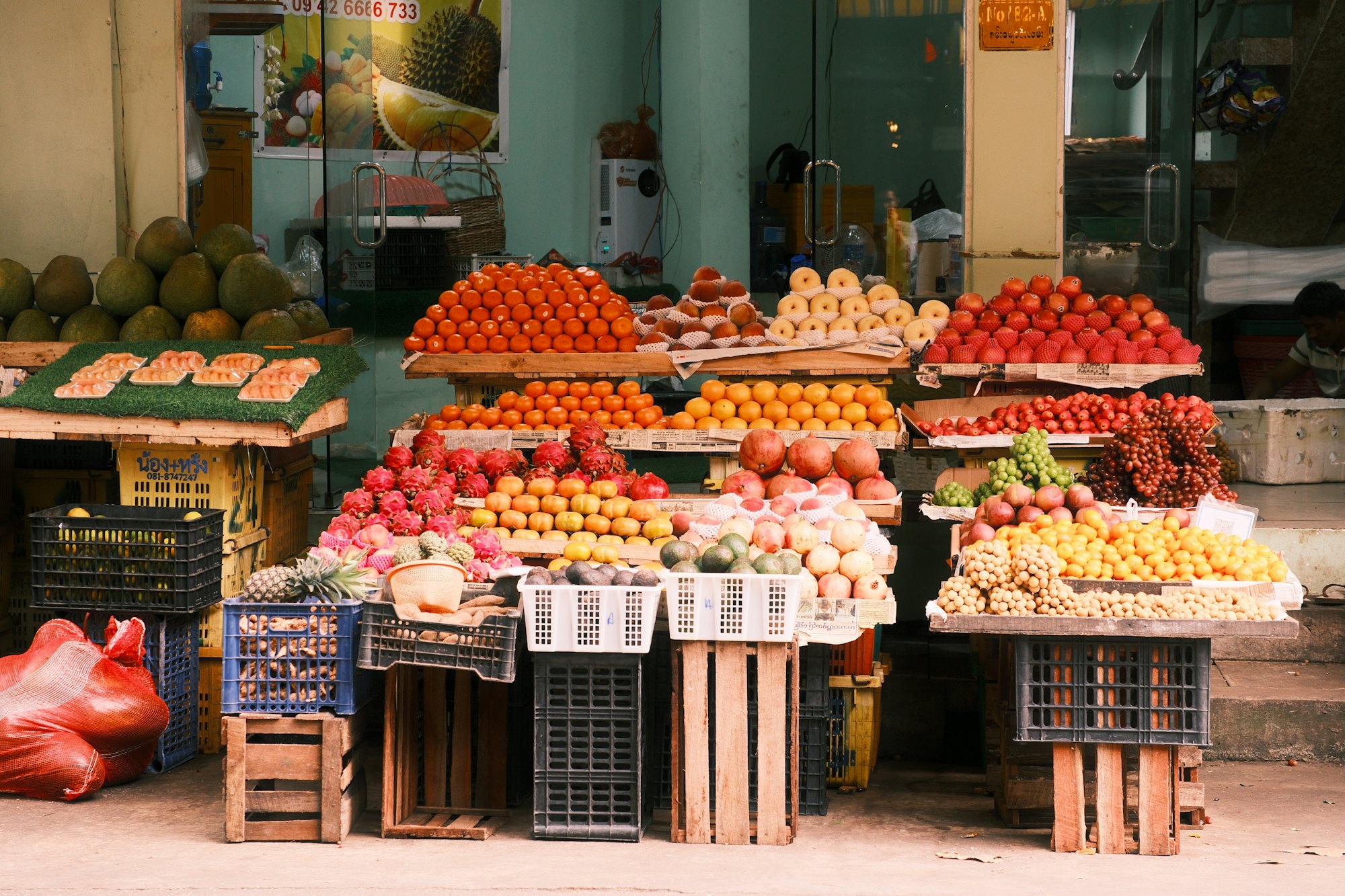
A fruit shop front stacked with crates of dragon fruit, pomelo, longan, oranges and pomegranates

The consent rule

No link, no access. The diary stays with the grower.

6.2Many plots at a glance

A list of linked plots with each market's date and colour, so you can see which lots can be picked for which market.

Illustration
Linked plots, illustration
Plot Last spray Strict-limit market High-limit market
Plot A · Grower 1 Example Fungicide 70WP, 1 Oct 2026, label dose From 1 Dec 2026 From the spray day
Plot B · Grower 2 Example Fungicide 70WP, 1 Oct 2026, double dose From 11 Dec 2026 From the spray day
Plot C · Grower 3 Example 25SC, 4 Oct 2026 No date: product not recognised No date: product not recognised
  • Plot A · Grower 1

    Last spray
    Example Fungicide 70WP, 1 Oct 2026, label dose
    Strict-limit market
    From 1 Dec 2026
    High-limit market
    From the spray day
  • Plot B · Grower 2

    Last spray
    Example Fungicide 70WP, 1 Oct 2026, double dose
    Strict-limit market
    From 11 Dec 2026
    High-limit market
    From the spray day
  • Plot C · Grower 3

    Last spray
    Example 25SC, 4 Oct 2026
    Strict-limit market
    No date: product not recognised
    High-limit market
    No date: product not recognised

Illustration built from the invented worked example. Plot and grower names are invented.

6.3The laboratory cross-check

When a lot is tested, its laboratory certificate can be added. The app will compare:

  • the diary's estimate with what the laboratory measured;
  • the substances the laboratory found with the substances in the diary, and flag any substance found but not recorded.

This helps find gaps in the records before a buyer does.

A laboratory technician in gloves and safety glasses loading sample tubes into an analyser

Cross-check · sample

Plot A, sampled on day 61

Diary estimate, day 61
≈ 0.048 mg/kg
Lab certificate (sample)
0.03 mg/kg
Strict-limit market
0.05 mg/kg
Found but not in the diary
None

Lab value is below the cautious estimate and the limit

Sample certificate, invented values.

6.4How certificates help

Certificates will also be used to check how cautious the dates are.

Good to know

  • A cross-check compares records; it does not certify a lot. Only the laboratory certificate does that.

Chapter 7 How the dates work For: Technicians, exporters, anyone curious

The method: how the dates are worked out.

We want you to be able to check our reasoning. This chapter explains, without formulas you need to remember, how a spray in the diary becomes a date for each market. The ideas are standard residue science. What AgriAn adds is putting them together for Vietnamese products and each market's own rules.

7.1From spray to starting residue

From the amount per tank, the tank size and the product's strength, the app works out how much active substance was in the spray. From that it estimates how much lands on the fruit: the starting residue. A stronger mix gives a higher starting residue.

In the worked example

50 g per tank × 700 g/kg ÷ 16 litres = 2.19 g of substance per litre

7.2Half-life: residue falls by half, again and again

After spraying, the residue on the fruit breaks down. For most substances it falls in a steady pattern: after a certain number of days half is left, after the same number again a quarter, then an eighth. That number of days is the half-life.

Dose effect: double the starting residue and you need one more half-life to get back to the same level. Four times the dose: two more half-lives.

Residue left, % of the starting amount · half-life of 10 days

100 Day 0
50 Day 10
25 Day 20
12.5 Day 30
The worked example, as a curve
Label dose Double the dose

Residue the lab measures, mg/kg (log scale)

Cautious residue estimate for the invented worked example: 3.28 mg/kg on the spray day, half-life 10 days. It reaches the strict limit on day 61; at double the dose on day 71. Example with invented data.

7.3A cautious upper bound, not a forecast

Real fields differ a lot. In published trials on dragon fruit, fields sprayed the same way ended up with residues several times apart.

So the app does not try to guess the typical field. It assumes the slow case:

  • a half-life chosen on the long side, by a rule written down before any test: the slower of the longest published fruit half-life and the slope of official trial series;
  • a starting residue on the high side;
  • no credit for anything that might speed the decline.

The date is the first day on which this cautious estimate is at or below the limit. Most fields should be below it sooner; the method is designed so that few fields are above it later.

7.4Why weather is not used in the date

Sun, rain and heat can speed up the breakdown. But by how much depends on many things a forecast cannot tell, and forecasts can be wrong. A date that counted on rain could be too early.

So the date never gives credit for weather: not rain, not temperature, not the place or its climate. Your location is never an input either. Weather is used only to help you choose when to spray (chapter 5).

7.5Each market measures residue its own way

A limit applies to a residue definition: the exact substance, or sum of substances, that the market's laboratories measure.

  • Sometimes it is the sprayed substance itself.
  • Sometimes it is what the substance turns into.
  • Sometimes several substances are added together and expressed as one. In the EU, the dithiocarbamate fungicides (mancozeb is one) are measured together as carbon disulphide (CS2), so two products from this group count towards the same limit.

The app looks up each market's own definition, converts the sprayed amount into what that market measures, adds up everything that counts, and compares the total with that market's limit.

In the worked example

On the fruit

6.56 mg/kg

What the lab measures

3.28 mg/kg

Example with invented data.

7.6What is not counted

  • Washing and peeling. The EU limit applies to the whole fruit with its peel, so the date does not subtract them.
  • Fruit growth, which spreads the residue over more fruit.
  • Treatments after harvest: recorded, but given no date.

Each of these would make the date earlier, so leaving them out keeps it on the safe side.

7.7The worked example, in full

One invented spray, followed through every step. Switch between the label dose and double the dose to see one more half-life added.

Spray diary entry

  • Example Fungicide 70WP
  • examplezeb, 700 g/kg
  • 1 Oct 2026
  • 50 g per 16-litre tank100 g per 16-litre tank
  • 4 tanks

Dose

2.19 g of substance per litre4.38 g of substance per litre

Starting residue

6.56 mg/kg13.12 mg/kg

What the lab measures

3.28 mg/kg6.56 mg/kg

Half-life

10 days

Strict-limit market

From 1 Dec 2026From 11 Dec 2026

Limit: 0.05 mg/kg. Day 61. Cautious: the decline rate comes from the literature only.Day 71. Doubling the dose added one half-life (10 days).

High-limit market

From the spray day

Limit: 10 mg/kg. 3.28 mg/kg is already under 10 mg/kg on the spray day. The label waiting time still applies.

Market with no limit listed

No date

Limit: none. Nothing to compare with. Not a green light.

Below the limit from this date A date, with a caution to read No date: no limit to compare with
Join the pilot to use it on your own diary

Example with invented data.

7.8How the method is checked

  • The calculation is tested step by step against hand-worked numbers.
  • The cautious half-lives are tested against published residue trials, leaving one source out at a time, to see how often a measured value lands above the estimate.
  • Later, against the laboratory certificates of real lots.

Results will be published here once the test against published trials has run, with the number of values and sources behind them.

Good to know

  • For dithiocarbamates and some other substances that matter for the EU, no decline data on dragon fruit has been published. Their dates rest on data from other fruit and are shown in amber.

  • Every date says which limit, which residue definition and which data version it used.

Chapter 8 How the dates work For: Everyone

Data sources and your data.

Every limit, product record and alert comes from a public source with a name and a date. Your own diary stays yours.

A calm green canal under arching trees in Tra Su forest, An Giang, Mekong Delta

8.1Public sources we use

Public data sources
What Source null null
Products allowed and banned in Vietnam Ministry circulars: Circular 75/2025, amended by Circular 28/2026
Label doses and waiting times Plant Protection Department (ppd.gov.vn)
EU limits and residue definitions EU Pesticides Database
China limits National standard GB 2763
International limits Codex Alimentarius
How fast residues fall Published field trials and open half-life data sets
Conversion between measured forms Official EU residue definitions and conversion factors
Effect of washing and peeling (explanation only) EU database of processing factors
Pest reports Provincial plant-protection bulletins
Weather forecast ECMWF open data (CC BY 4.0)
  • Products allowed and banned in Vietnam

    Source
    Ministry circulars: Circular 75/2025, amended by Circular 28/2026
    null
    null
  • Label doses and waiting times

    Source
    Plant Protection Department (ppd.gov.vn)
    null
    null
  • EU limits and residue definitions

    Source
    EU Pesticides Database
    null
    null
  • China limits

    Source
    National standard GB 2763
    null
    null
  • International limits

    Source
    Codex Alimentarius
    null
    null
  • How fast residues fall

    Source
    Published field trials and open half-life data sets
    null
    null
  • Conversion between measured forms

    Source
    Official EU residue definitions and conversion factors
    null
    null
  • Effect of washing and peeling (explanation only)

    Source
    EU database of processing factors
    null
    null
  • Pest reports

    Source
    Provincial plant-protection bulletins
    null
    null
  • Weather forecast

    Source
    ECMWF open data (CC BY 4.0)
    null
    null

8.2How fresh the data is

Every limit and product record carries its source and the date it was read. Limits change; the app uses the limit valid on the date it works out.

8.3What has not been checked yet

Where a record has not yet been checked by a person, for example a Chinese limit not yet read by a reader of Chinese, the app says so and the date is amber.

8.4Your diary and your location

  • Your spray diary belongs to you. An organisation sees it only if you link it.
  • The app asks for your province, not your exact position.
  • Your location is never used to work out the dates.
Read the privacy policy

We do not sell personal data, and we do not show advertising. Spray diaries and farm locations are treated as personal data.

Chapter 9 How the dates work For: Everyone

Limits of the dates, and a glossary.

What a date can and cannot tell you, and the words used in the app.

9.1What the dates can tell you

  • From which day the harvest should be within each market's limit, under cautious assumptions.
  • Which spray and which substance sets each date.

9.2What they cannot tell you

  • That a lot will pass a laboratory test. Only the laboratory can say that.
  • Anything about fruit that was sprayed but not recorded, or recorded wrongly.
  • The residue after a post-harvest treatment, or in peeled fruit.
  • Whether a buyer has private rules stricter than the law.

9.3Glossary

The words used in the app, in plain English.

01 Cách ly (thời gian cách ly)
The waiting time between the last spray and the harvest. Printed on every Vietnamese label.
02 PHI (pre-harvest interval)
The English name for the same waiting time.
03 Safe-to-sell date
In AgriAn: the first harvest day on which the cautious residue estimate is at or below a market's limit. One per market.
04 Residue
The amount of a pesticide, or of what it turns into, left on or in the fruit, in mg per kg of fruit.
05 MRL / limit
Maximum residue limit: the highest residue a market allows by law in a food. Each market sets its own.
06 Residue definition
The exact substance, or sum of substances, that a limit applies to and a laboratory measures.
07 Active substance
The chemical in a product that does the work. One product can hold several.
08 Trade name
The commercial name on the label.
09 Strength (concentration)
How much active substance is in the product, for example 80% or 700 g/kg.
10 Dose
How much active substance goes into the spray, from the amount per tank and the product's strength.
11 Half-life
The number of days in which the residue falls to half.
12 Cautious upper bound
An estimate set on the high side on purpose, so that real residues are usually lower.
13 Limit of quantification
The lowest amount a laboratory can reliably measure. Many limits are set at this level.
14 Conversion factor
The number that turns the sprayed substance into the form a market measures, for example as CS2.
15 Dithiocarbamates / CS2
A group of fungicides, mancozeb among them, that the EU measures together as carbon disulphide.
16 Processing factor
How much washing, peeling or cooking changes the residue.
17 Growth regulator
A product that changes how the plant grows, flowers or ripens.
18 Post-harvest treatment
A dip or store treatment after picking.
19 Codex (Codex Alimentarius)
The international food-standards body. Many countries use its limits.
20 GB 2763
China's national standard for pesticide residue limits.
21 Laboratory certificate
A lab's report of the residues measured in a sample from a lot.
22 Lot
A batch of fruit shipped and tested together.
23 Amber
A date that rests on at least one less certain input. The reason is shown.
24 No date
Shown in grey when the app cannot give an honest date. The reason is shown.
25 Pest bulletin
A regular report from a provincial plant-protection office on pests and diseases.
26 Forecast square
The area of about 25 km that one weather forecast value describes.
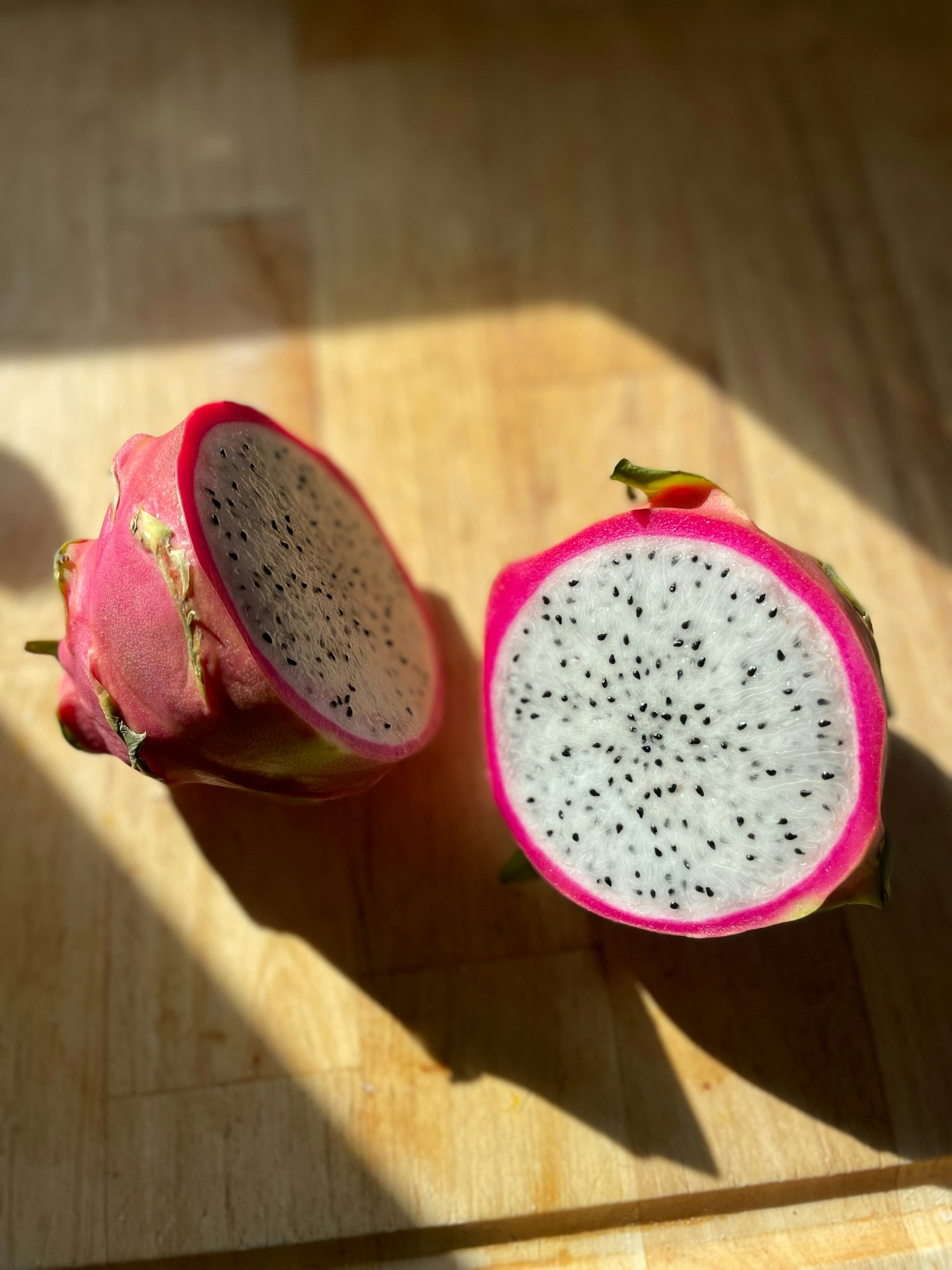
Two halves of a red dragon fruit with white, black-seeded flesh on a sunlit wooden board

Why the dates matter

6 of 17

recent EU border rejections of Vietnamese dragon fruit (2024-2026) were for dithiocarbamate fungicides (the mancozeb group), the most common reason

EU RASFF Window, notification details 2024-2026, our count 16 Nov 2026. The lab test measures the whole group as CS2, so it cannot single out mancozeb.

Join the pilot

Read the reasoning. Then test it on your own diary.

We are looking for exporters, packing houses, cooperatives and growers to try the first version with us. Free during the pilot, from any country.